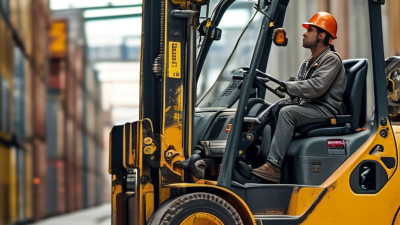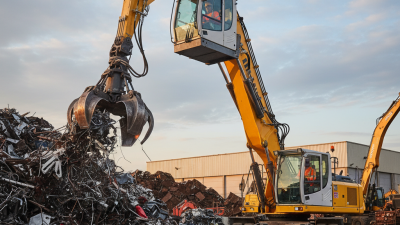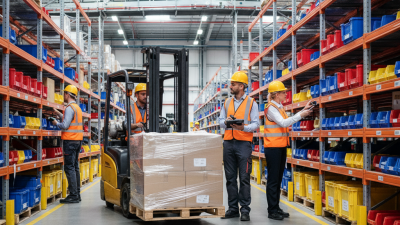
Material handling equipment keeps ports, recycling yards, timber sites, warehouses, and industrial plants moving. Yet choosing a machine is rarely as simple as comparing lifting capacity. Ground conditions, material density, working radius, attachment needs, and service access can change the right choice. A machine that performs well on a paved yard may struggle on soft, uneven ground.
The investment stakes are rising. MHI’s 2024 Annual Industry Report found that 55% of surveyed supply-chain professionals planned to increase technology investment over the next five years. The report also found that 88% expected robotics and automation adoption within that period. These figures describe broad supply-chain technology, not material handlers alone. Still, they show why buyers increasingly weigh productivity, operator support, and fleet integration alongside purchase price.
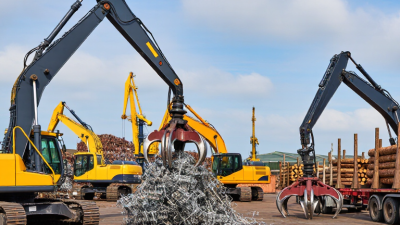
This guide compares seven widely used Material Handler Machine types for global buyers, from wheeled handlers to excavator-based models and telehandlers. It focuses on practical selection factors: reach, rated capacity, stability, attachments, fuel or power options, and regional parts support. No machine is best everywhere. A longer boom may help at a scrap yard, but it can bring trade-offs in stability, transport, or cost. The comparison is a starting point, not a substitute for checking site conditions and manufacturer specifications. That part is easy to underestimate.
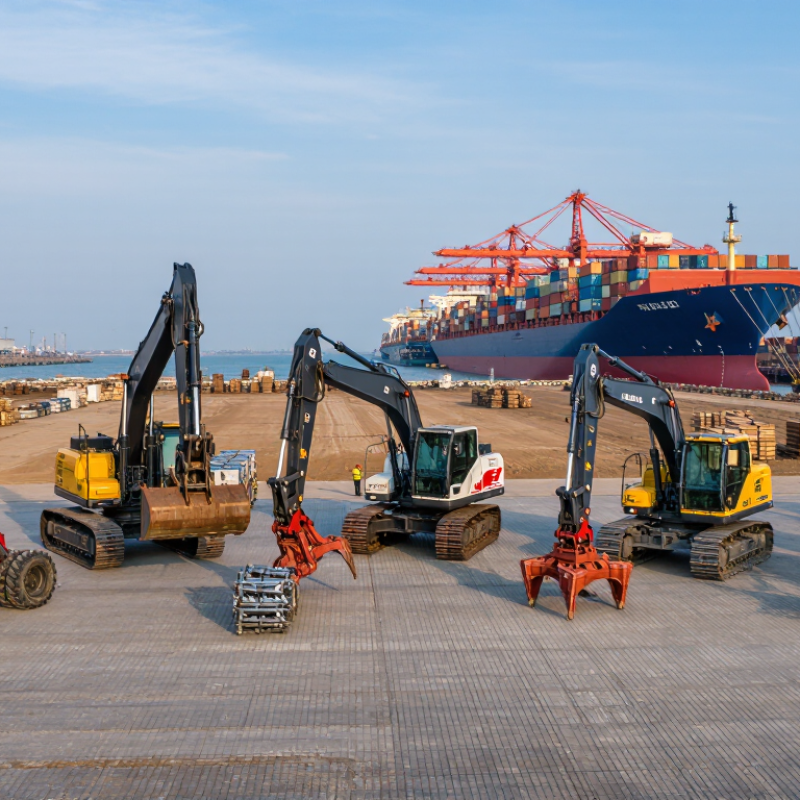
Material handling equipment is easier to compare when load, lift height, and travel surface are considered together. A hand pallet truck suits short, low-level moves on smooth floors. An electric pallet truck handles heavier or more frequent pallet trips with less pushing. Both have limited lift height. Neither is designed for rough ground.
For vertical storage, a stacker lifts pallets above floor level in compact aisles, though its capacity and reach depend on the mast and load center. A counterbalance forklift handles varied pallet loads and higher lifts, but needs adequate turning space and firm, level flooring. A reach truck can access taller warehouse racking in narrower aisles; uneven surfaces are a poor fit. Check the load chart at the intended lift height. Rated capacity can decrease as the load rises.
Outdoor work calls for different choices. A rough-terrain forklift carries bulky loads over uneven yards, while a telehandler combines a telescopic boom with reach across obstacles or onto elevated platforms. Surface matters. Tire type, ground clearance, and load stability all affect safe travel. I would not select by maximum capacity alone; that shortcut can overlook aisle width, floor condition, and the actual load center. Specs vary, so compare machine data with measured site conditions before choosing.
Rated capacity is not a simple measure of how much a machine can carry in every situation. Forklifts often offer higher capacities for moving pallets across yards or warehouse floors, but their stated rating depends on the load center and lift height. A compact counterbalance forklift might be rated around 1.5 tonnes; larger models can handle several tonnes. Check the data plate, not just the brochure headline. That detail matters.
Reach trucks are designed for narrow aisles and elevated storage. Many handle roughly 1 to 2.5 tonnes, though capacity can fall as the forks rise or extend. A pallet that is safe at low level may exceed the truck’s permitted capacity near the top rack. Attachments can reduce it further. Check the plate.
Order pickers serve a different job: raising an operator to select individual items. Their rated load may include the operator, tools, and picked goods, so it should not be compared directly with a forklift’s pallet capacity. Confirm the platform limit and the permitted load at working height. It is easy to focus on the largest number and miss the actual duty cycle. That’s a mistake buyers can make. Compare the machine’s capacity chart against your heaviest real load, aisle width, and highest storage position before choosing.
Pallet trucks suit short moves across smooth, level floors, especially where aisles are tight and loads stay low. Check turning space, floor joints, and ramp gradients before choosing powered or manual equipment. A small wheel can catch at a dock plate. Stackers add vertical storage for light-to-medium loads, but mast height, load center, and aisle width must all match the rack layout. Measure the highest beam and the narrowest aisle on site. We still see buyers focus on rated capacity alone. That shortcut can mislead.
Telehandlers fit uneven yards, construction sites, and outdoor loading where reach and ground clearance matter. Compare maximum lift capacity at the actual boom extension, not just the headline rating. Soft soil, overhead obstructions, and frequent repositioning can change the right choice. OSHA reports that powered industrial trucks are associated with about 85 fatal accidents and 34,900 serious injuries annually in the United States; its powered industrial truck guidance makes operator training and safe operating conditions essential selection factors. MHI’s 2024 Annual Industry Report found that 55% of surveyed supply-chain professionals planned to increase technology investment over the next five years. Fleet data can help track utilization, but sensors cannot fix a poor machine-to-site match. Walk the route. Check the load. Then verify the operating limits against the job.
For global buyers comparing material handler machines, an AGV’s safety case matters as much as its payload rating. ISO 3691-4:2023 addresses safety requirements for driverless industrial trucks and their systems. Buyers should check how the vehicle detects people, stops at crossings, and behaves when a sensor is blocked. Test those functions on the actual route, not only in a clear showroom. Small details matter.
The International Federation of Robotics reported 541,302 industrial robots installed worldwide in 2023 in World Robotics 2024. That figure covers industrial robots broadly, not AGVs specifically; it signals growing automation, not proof that every site is ready. During assessment, ask for documented risk evaluations, speed limits, braking performance, warning signals, and emergency-stop access. Also inspect blind corners, floor joints, loading points, and pedestrian crossings. A polished demo can miss these.
Commissioning should include realistic trials with full loads, mixed foot traffic, and temporary obstructions. Record stopping distances and verify that protective devices trigger consistently. Confirm operators know how to isolate the machine and recover it safely. One gap deserves reflection: a compliant vehicle can still be poorly integrated into a crowded aisle. Review the route after installation, and repeat checks when layouts or traffic patterns change.
Material handlers may include counterbalanced forklifts, reach trucks, pallet trucks, and order pickers. Their controls differ, but every powered industrial truck needs a documented inspection before service each day. For equipment used around the clock, inspect it after each shift. OSHA’s 29 CFR 1910.178(q)(7) calls for checking brakes, steering, controls, forks, tires, warning devices, and leaks. Look closely at fork heels and hydraulic hoses; a small crack or fresh oil spot matters. Stop using unsafe equipment until it is repaired.
A checklist is useful, not magical. A signature cannot reveal every defect, especially when a rushed walk-around misses a loose connection. OSHA’s powered industrial truck safety materials cite estimates of about 85 fatalities and 34,900 serious injuries annually; these figures underline why checks should be practical, not merely paperwork. Operators also need training and evaluation for the truck types and workplace conditions they encounter. Under 1910.178(l)(4)(iii), evaluate each operator at least once every three years. Re-evaluate sooner when unsafe operation is observed, an accident or near miss occurs, or workplace conditions change. Keep the evaluation tied to real tasks, such as turning with a raised load or positioning a pallet in a narrow aisle. Real practice counts.