Leave Your Message

China Top 10 Excavator Attachments for Demolition

China’s demolition sector demands attachments that can cut, crush, sort, and handle materials safely. Excavator Attachments For Demolition help contractors match machine power with each stage of the job. The right tool can reduce manual handling and improve site control.

This guide examines China’s top ten demolition attachments through practical performance, build quality, maintenance access, and operating flexibility. The selection considers hydraulic compatibility, jaw design, working pressure, replaceable wear parts, and after-sales support. Concrete details matter. A pulverizer must open smoothly through reinforced concrete. A hydraulic breaker should deliver consistent impact energy without excessive vibration. A grapple needs firm control when moving twisted steel or timber.

Real projects are rarely perfect. Dust affects visibility. Old concrete hides unexpected rebar. Hydraulic flow may differ between excavators, even within the same model range. For this reason, no attachment is universally best. Field testing, manufacturer data, and operator experience should guide the final decision. Some specifications may also change between production batches or export markets.

The featured equipment includes hydraulic breakers, concrete crushers, demolition shears, pulverizers, grapples, quick couplers, and specialized sorting tools. Each attachment serves a different purpose and carries different maintenance demands. Reliable suppliers should provide clear technical documents, compatibility guidance, wear-part information, and responsive service. Independent inspection remains valuable, especially before large projects. Safety procedures, trained operators, and local requirements must control every application. Performance matters. So does restraint. This overview aims to support informed purchasing decisions, while recognizing that actual results depend on the machine, material, operator, and worksite conditions.
China Top 10 Excavator Attachments for Demolition

Demolition Excavator Attachments: Types, Uses, and Selection Criteria

China Top 10 Excavator Attachments for Demolition

Demolition Excavator Attachments: Types, Uses, and Selection Criteria

Demolition projects need controlled force, not simply the largest attachment. The U.S. EPA estimated 600 million tons of construction and demolition debris in 2018. That volume makes sorting and recovery important.

The main attachment choices include hydraulic breakers, pulverizers, concrete crushers, hydraulic shears, grapples, sorting grabs, drum cutters, magnets, crusher buckets, and quick couplers. Breakers suit reinforced slabs and foundations. Pulverizers reduce concrete into manageable pieces. Shears cut steel beams and tanks. Grapples separate timber, pipe, and mixed debris. Magnets help collect ferrous metal after crushing. A crusher bucket can process material directly on site, but it may reduce excavator productivity when feed is inconsistent.

Selection should begin with excavator operating weight, hydraulic flow, pressure, and auxiliary-line size. Check the attachment’s mass against the machine’s lift chart. For high-reach work, weight and balance matter more than headline crushing force. European standard EN 474-5 and local safety rules provide useful guidance for excavator operations. However, standards do not replace a site-specific risk assessment. That is where many plans become too optimistic.

Tips: Match the tool to the material thickness. Use a pulverizer for concrete separation, not heavy steel. Inspect pins, hoses, and couplers daily. Leave room for imperfect ground conditions; real sites rarely follow drawings exactly.
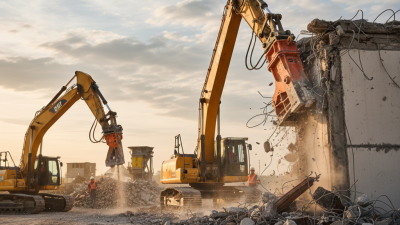
The Top 10 Excavator Attachments Made for Demolition Work in China

China Top 10 Excavator Attachments for Demolition

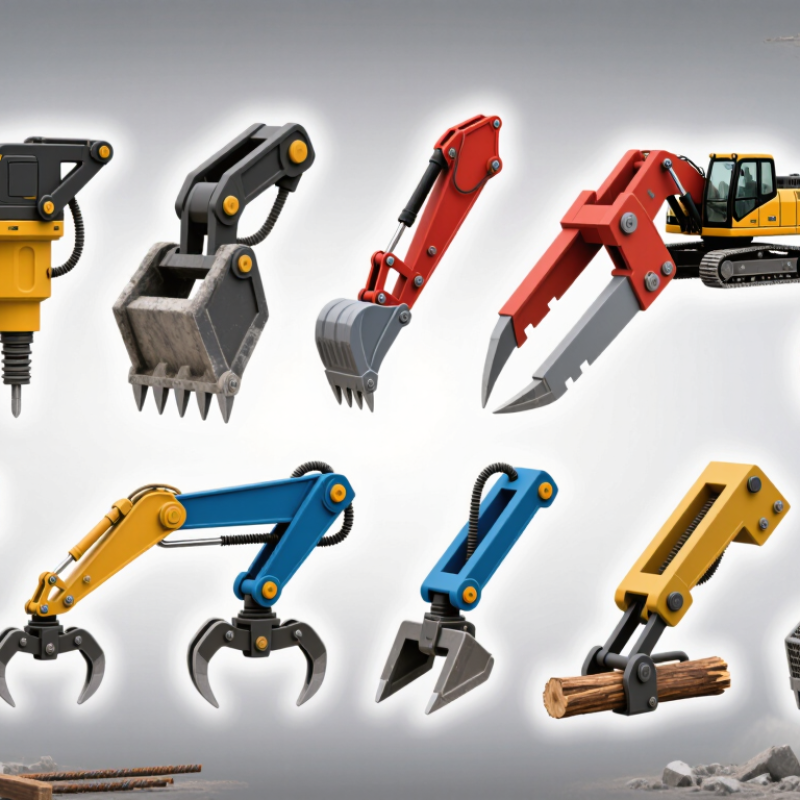
The top ten excavator attachments made for demolition work in China include hydraulic breakers, concrete pulverizers, hydraulic shears, crusher buckets, demolition grapples, sorting grapples, rotating grapples, scrap magnets, drum cutters, and heavy-duty buckets. Each tool suits a different stage of controlled removal. Breakers handle reinforced concrete, while pulverizers reduce walls into manageable pieces. Shears cut steel frames and metal pipes with steady hydraulic pressure.

Crusher buckets process broken concrete near the work area. This can reduce hauling costs and truck movement. Grapples separate timber, brick, and mixed debris quickly. Sorting models provide better control when materials need recovery. Magnets collect loose steel from crushed material. Drum cutters are useful for precise trimming around foundations, though they may work slowly on heavily reinforced concrete.

Attachment choice depends on excavator weight, hydraulic flow, pin dimensions, and site access. A trained operator should inspect hoses, teeth, blades, and locking systems before every shift. Dust suppression and exclusion zones remain essential. Cheap tools can create expensive downtime. I have seen productivity fall when a breaker was selected without checking hydraulic compatibility. That mistake is easy to repeat. Chinese demolition equipment is becoming more practical, but specifications still require careful verification. Jobsite trials, maintenance records, and compliance documents offer stronger evidence than sales claims.

Key Features and Applications of Each Demolition Attachment

China Top 10 Excavator Attachments for Demolition

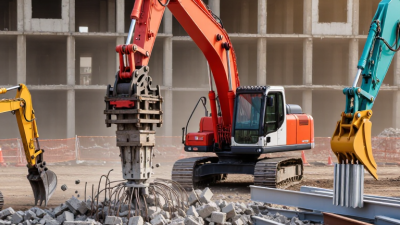
Demolition work demands controlled force, not maximum force. A hydraulic breaker delivers repeated impact for concrete slabs, columns, and foundations. A pulverizer uses jaws to crush concrete and expose reinforcement. A demolition shear cuts steel beams and pipe sections. A concrete crusher reduces wall fragments before loading. These tools need matching hydraulic flow and carrier weight. Otherwise, productivity falls quickly.

A crusher bucket processes concrete on site and reduces truck movements. A screening bucket separates soil, brick, and reusable aggregate. A sorting grapple handles irregular debris with better visibility. A demolition grapple provides firm control during structural dismantling. A hydraulic magnet collects ferrous fragments from dusty surfaces. A drum cutter trims concrete edges and removes material near sensitive structures. It works more slowly, but precision matters.

The U.S. EPA reported about 600 million tons of construction and demolition materials in 2018. Eurostat identifies construction and demolition waste as more than one-third of EU waste generation. These figures explain the value of crushing, screening, sorting, and recovery attachments. Attachment selection should consider dust, vibration, reach, and daily material volume. Field checks still matter. A tool that looks efficient on paper may overload the excavator in real work. No attachment is perfect. The missed detail is often hydraulic compatibility.

China Top 10 Excavator Attachments for Demolition - Key Features and Applications of Each Demolition Attachment

Rank Excavator Attachment Primary Demolition Application Key Features Typical Materials Important Operating Considerations
1 Hydraulic Breaker Breaking concrete slabs, foundations, masonry and rock-like structures Impact piston delivers repeated blows through a chisel or moil point; available in different energy classes; suitable for primary breaking and general demolition work Reinforced concrete, plain concrete, brick, blockwork and asphalt Requires correct hydraulic flow and pressure; excessive blank firing, side loading and inadequate lubrication can accelerate wear; vibration and noise control may be required
2 Hydraulic Pulverizer Secondary reduction of concrete and separation of concrete from reinforcing steel Crushing jaws apply compressive force; produces relatively controlled fragmentation; fixed and rotating versions are commonly used Reinforced concrete, concrete beams, columns, walls and slabs Works best after initial structural breaking; jaw teeth and crushing surfaces need inspection; avoid crushing materials beyond the attachment's rated capacity
3 Hydraulic Demolition Shear Cutting structural steel, metal frames, pipes and reinforced concrete members High-force blades cut rather than impact; rotating models improve positioning; useful for controlled dismantling and scrap-size reduction Structural steel, steel beams, reinforcement bars, pipes and selected concrete sections Blade clearance and alignment are important; operators should avoid hardened inclusions and unsuitable materials; cutting zones must be kept clear of personnel
4 Demolition Grapple Handling, pulling down and loading demolition debris Hydraulically operated tines provide gripping and sorting; wide opening improves material handling; rotating designs support precise placement Timber, concrete pieces, masonry, steel sections and mixed construction debris Primarily a handling and sorting tool rather than a dedicated crushing device; load stability, hydraulic rotation limits and excavator lifting capacity must be observed
5 Crusher Bucket On-site crushing and reuse of concrete and masonry Jaw or plate mechanism crushes material inside a bucket-shaped frame; reduces hauling and disposal needs; processed material can be reused as fill or sub-base when permitted Concrete rubble, bricks, blocks, asphalt and natural stone Feed size must remain within the bucket's limits; reinforcing steel should be removed or managed according to the design; dust suppression and screening may be necessary
6 Sorting Grapple Selective dismantling, material separation and site cleanup Large tine openings improve visibility and sorting; controlled hydraulic movement allows selective handling; useful for separating recyclable and non-recyclable streams Wood, metal, masonry, concrete fragments, plastics and mixed debris Choose tine spacing according to the target material; avoid side pulling and overloading; sorting efficiency depends on a manageable debris pile and adequate operator visibility
7 Hydraulic Scrap Magnet Collecting ferrous metal from demolition debris and processed concrete Electromagnetic lifting system gathers iron and steel without manual handling; improves recovery and site housekeeping; may be powered by an excavator-mounted generator or hydraulic system Reinforcing steel, structural steel, iron fragments, nails and ferrous scrap Only ferromagnetic materials can be lifted; power, duty cycle and heat management must match the magnet system; establish exclusion zones during lifting
8 Drum Cutter Controlled milling, trenching and selective removal of concrete or rock Rotating drums fitted with cutting picks provide precise material removal; produces a smoother profile than impact breaking; useful in confined or sensitive areas Concrete, shotcrete, rock, masonry and asphalt Generates dust, noise and fine particles; cutting performance depends on material hardness and hydraulic power; water suppression and pick inspection can improve productivity
9 Hydraulic Concrete Saw Making controlled cuts in slabs, walls, bridge elements and pavement Diamond blade creates accurate cuts with limited surrounding damage; suitable for sectioning structures before removal; can support selective demolition planning Reinforced concrete, plain concrete, asphalt and masonry Requires suitable water or dust-control measures; blade diameter and cutting depth limit the section size; hidden utilities and embedded steel must be assessed before cutting
10 Hydraulic Multi-Processor Versatile demolition involving crushing, pulverizing and steel cutting Interchangeable jaws allow one carrier to perform different tasks; supports primary and secondary demolition; reduces attachment changes on varied projects Reinforced concrete, masonry, structural steel and mixed building components Each jaw type has a specific purpose and capacity; changing tools requires proper isolation and securing procedures; carrier stability and hydraulic compatibility are essential

How to Match Attachments with Excavator Size and Demolition Tasks

China Top 10 Excavator Attachments for Demolition

How to Match Attachments with Excavator Size and Demolition Tasks

Choosing demolition attachments starts with machine weight, hydraulic flow, and the material being removed. A compact excavator suits light breakers, grapples, and sorting magnets. Medium excavators can handle pulverizers, drum cutters, and smaller shears. Large excavators provide the stability and hydraulic power needed for heavy breakers and concrete crushers. Check the attachment’s required flow before purchase. A powerful tool on an undersized machine can overheat the hydraulic system and reduce control.

The U.S. EPA estimated 600 million tons of construction and demolition debris were generated in 2018. That volume makes separation equipment increasingly important.

Use a breaker for thick slabs, a pulverizer for secondary concrete reduction, and a shear for reinforced steel. Grapples improve loading and sorting, while magnets collect ferrous fragments. Other useful choices include hydraulic hammers, crushers, demolition shears, pulverizers, grapples, magnets, drum cutters, buckets, augers, and quick couplers. The task decides the ranking.

The 2023 Global Status Report for Buildings and Construction reported that buildings consumed about 34% of global energy and produced approximately 37% of energy-related emissions.

Careful attachment selection can reduce idle time, transport, and rework. Still, a catalog chart cannot replace a site test.

Actual concrete density, rebar congestion, operator technique, and machine age may change the result. Measure the carrier’s auxiliary flow and lifting capacity on site. Then compare cycle time, wear rate, and fuel use over several shifts. Small errors become expensive.

Safety, Maintenance, and Purchasing Considerations for Demolition Attachments

China Top 10 Excavator Attachments for Demolition

Safe demolition starts with matching the attachment to the structure, material, and excavator. Common choices include hydraulic breakers, pulverizers, shears, grapples, crusher buckets, magnets, drum cutters, screening buckets, quick couplers, and tilt couplers. Each tool creates different forces and risks. A breaker can send vibration through the boom. A shear can shift suddenly when cutting reinforced steel. Operators should inspect pins, hoses, guards, and locking systems before every shift. Small defects become serious under heavy loads.

Keep people outside the swing radius and possible collapse zone. Use barriers, clear signals, and a spotter where visibility is limited. Dust suppression matters when concrete is crushed. Eye, hearing, respiratory, and foot protection should match the site assessment. Never rely on the attachment’s appearance alone. Hidden cracks may exist. The operator should test controls at low speed and stop after unusual noise, leakage, or movement appears.

Maintenance records should include operating hours, grease points, hydraulic pressure, tooth wear, and structural inspections. Clean couplers before connection, then confirm visual and mechanical locking. During purchasing, compare rated flow, pressure, weight, jaw opening, cycle speed, spare-part access, and service support. A low purchase price may hide frequent downtime. That lesson is easy to overlook. Larger is not always better; excessive attachment weight can reduce stability and accelerate wear. Soil, concrete thickness, steel content, and transport limits should guide the final selection. Some assumptions will be wrong, so allow testing and reassessment before committing to a large fleet purchase.