

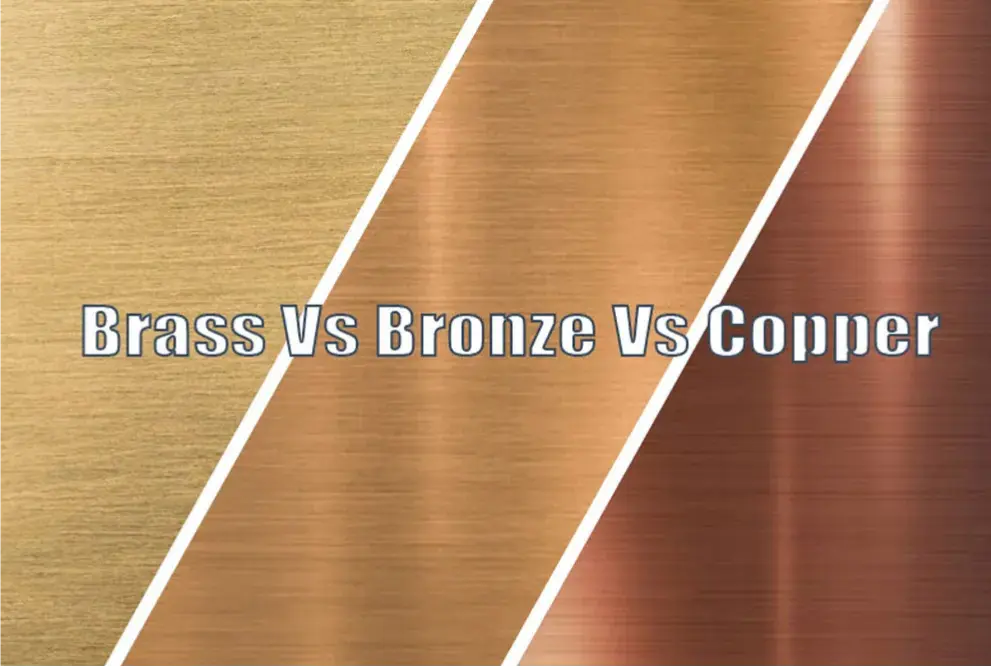
Copper vs. Brass vs. Bronze - Comparing Metal Alloys
What Is Copper?
Copper is a non-ferrous transition metal. Unlike brass and bronze, it is a pure, naturally occurring metal; therefore, it is found on the periodic table of elements. It is among the few metals found in nature that is directly suitable for processing. Although it is used on its own, it is also combined with other pure metals and alloys to form its own subset of alloys.
Properties of Copper
Copper has several properties that make it ideal for construction and manufacturing, such as:
- Copper demonstrates excellent thermal and electrical conductivity, making it suitable for use in electronic and electrical systems and thermal equipment.
- It exhibits resistance to many forms of damage, including impact, wear, and corrosion. Additionally, it maintains its strength when flexed, formed, and drawn.
- Bacterial antimicrobial resistance. The material resists bacteria without degrading. It even kills bacteria that are exposed to its surface. This quality makes it ideal for use in food-safe equipment.
Applications of Copper Metal Sheets & Shapes
In general, copper offers excellent conductivity, formability, and machinability. These qualities make copper metal sheets suitable for a wide range of industrial applications, including use as architectural, construction, plumbing, and heat exchanger materials and components. Additionally, its high ductility allows sheets to be drawn into wires for electrical systems.
What Is Brass?
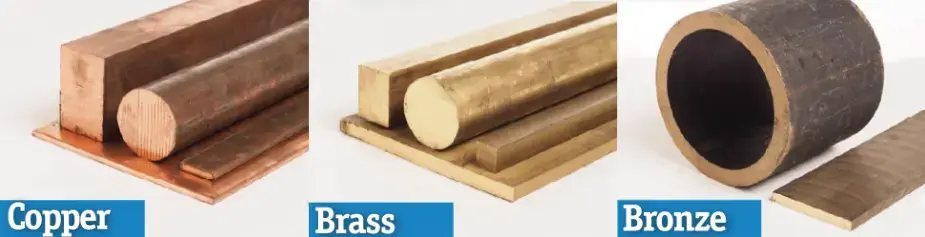
Like copper, brass is a non-ferrous, red metal. Unlike the pure metal, however, it is a metal alloy that primarily consists of copper and zinc. Other metals—such as lead, tin, iron, aluminum, silicon, and manganese—are also added to produce more unique combinations of characteristics. The addition of zinc enhances the strength and ductility of the base copper material. The higher the concentration of zinc, the stronger and more pliable the alloy. High-strength brass contains ≥39% zinc.
Properties of Brass
As a copper alloy, brass demonstrates many of the properties characteristic of copper. However, the alloy does exhibit a few distinct properties compared to pure copper and other copper alloys. For example:
- Susceptibility to stress-cracking. As brass is stronger and stiffer than pure copper, it is more susceptible to developing stress cracks.
- Malleability and formability. Compared to bronze, brass is more malleable. Additionally, it is easy to cast or work.
- High melting point. Brass has a melting point of approximately 900°C. The exact melting point differs based on the concentration of different metals in the alloy.
- Non-ferromagnetic. As brass is not ferromagnetic, it is much easier to process for recycling.
Depending on the additional metals added to the alloy, it can demonstrate varying characteristics, such as a variable melting point or greater corrosion resistance (due to the presence of manganese).
Application of Brass Alloys
Brass metal has several different applications. As the metal has a similar appearance to gold and is available in a variety of shades, it is often used for decorative & architectural elements. Additionally, the workability and machinability of the material lend it to use in the manufacture of plumbing, electronics, and musical instruments.
What Is Bronze?
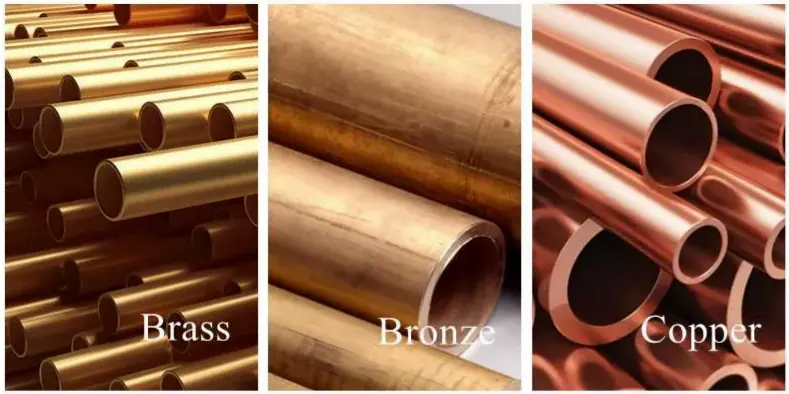
Bronze is a copper-based alloy that typically consists of approximately 88% copper and 12% tin. Trace amounts of other metals, such as aluminum, manganese, phosphorus, and silicon, may also be present in the alloy.
Properties of Bronze
Many of the properties of bronze overlap with those of copper and brass. For example:
- Excellent thermal conductivity
- Resistance to saltwater corrosion
- High ductility
However, it also exhibits a few unique characteristics, such as brittleness and a slightly higher melting point than brass (950°C).
Applications of Bronze Alloys
Bronze metal sheets & shapes are suitable for a wide range of industrial applications, including:
- Bushings and bearings
- Electrical connectors and springs
- Marine applications, such as propellers and for boat or ship fittings
- Petrochemical tools and oil rig components that require non-sparking metals